This year, "orchestration" is the most-used and least-understood word in AI projects. It sounds like control. In practice, it means someone has to handle what happens when one agent calls another, that one fails, a third is left waiting, and the human who should decide is stuck in a meeting.
When you actually need orchestration
Most initiatives don't need a multi-agent setup at all. A single agent with tools handles 80 percent of the cases that actually save money. Orchestration only becomes necessary once a task spans multiple areas of responsibility, has to run asynchronously, or needs different models to each play to their own strengths.
| Situation | Single agent | Orchestration |
|---|---|---|
| One clear flow, one system | Fully sufficient | Overkill |
| Several systems, fixed order | Sufficient with tools | Only needed for exceptions |
| Subtasks that can run in parallel | The sequence gets slow | Makes sense |
| Different models per step | Inflexible | Makes sense |
| Human approval along the way | Can get stuck | Makes sense with state management |
The three things every system needs
The moment a second agent enters the picture, you have a distributed system. Distributed systems without the following three building blocks become unreliable – not occasionally, but reliably unreliable.
- 01State: every step must be resumable, even after a failure. Without this, every error means starting over from scratch.
- 02Interface contracts: one agent must know exactly what the other delivers – not hope the format matches.
- 03Timeouts and fallbacks: a timeout that never fires blocks the entire chain. A fallback path isn't a luxury – it's a prerequisite for running in production.
An agent that's waiting without reporting that it's waiting isn't an agent anymore – it's a problem nobody has noticed yet.
The most common architectural misunderstanding
Teams build a "supervisor agent" that coordinates everything – and then hand it too much responsibility. A coordinator that decides, observes, decides again, and observes again becomes the bottleneck. Better: the coordinator distributes work, workers decide for themselves within their own boundaries, and a human only sees the exceptions.
What becomes tangible in a hackathon
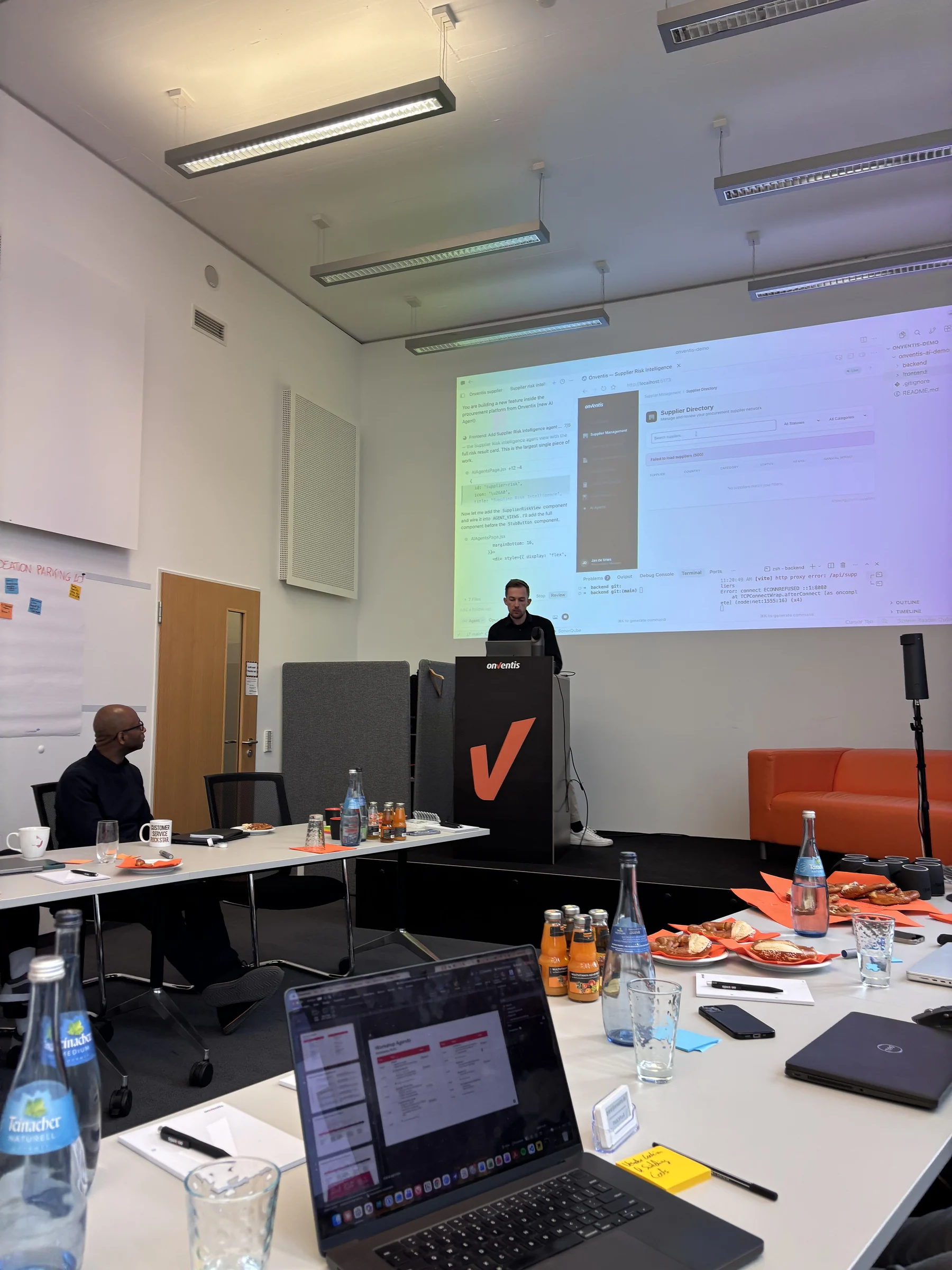
You don't learn orchestration from architecture diagrams – you learn it the moment your own prototype is standing and the second chain is still running an hour later. That exact moment – two or three agents collaborating on a real use case – makes excellent hackathon content, because it surfaces the questions nobody asks in a slide deck.
- When does an agent report back, and when does it wait silently?
- What happens if a tool doesn't respond within 30 seconds?
- Who's accountable when an agent takes the wrong action?
- How does a human see that something went wrong – without reading twenty logs?
Anyone who's had to answer these questions on their own prototype talks about agents differently afterward – more soberly and more concretely. That's exactly the point.